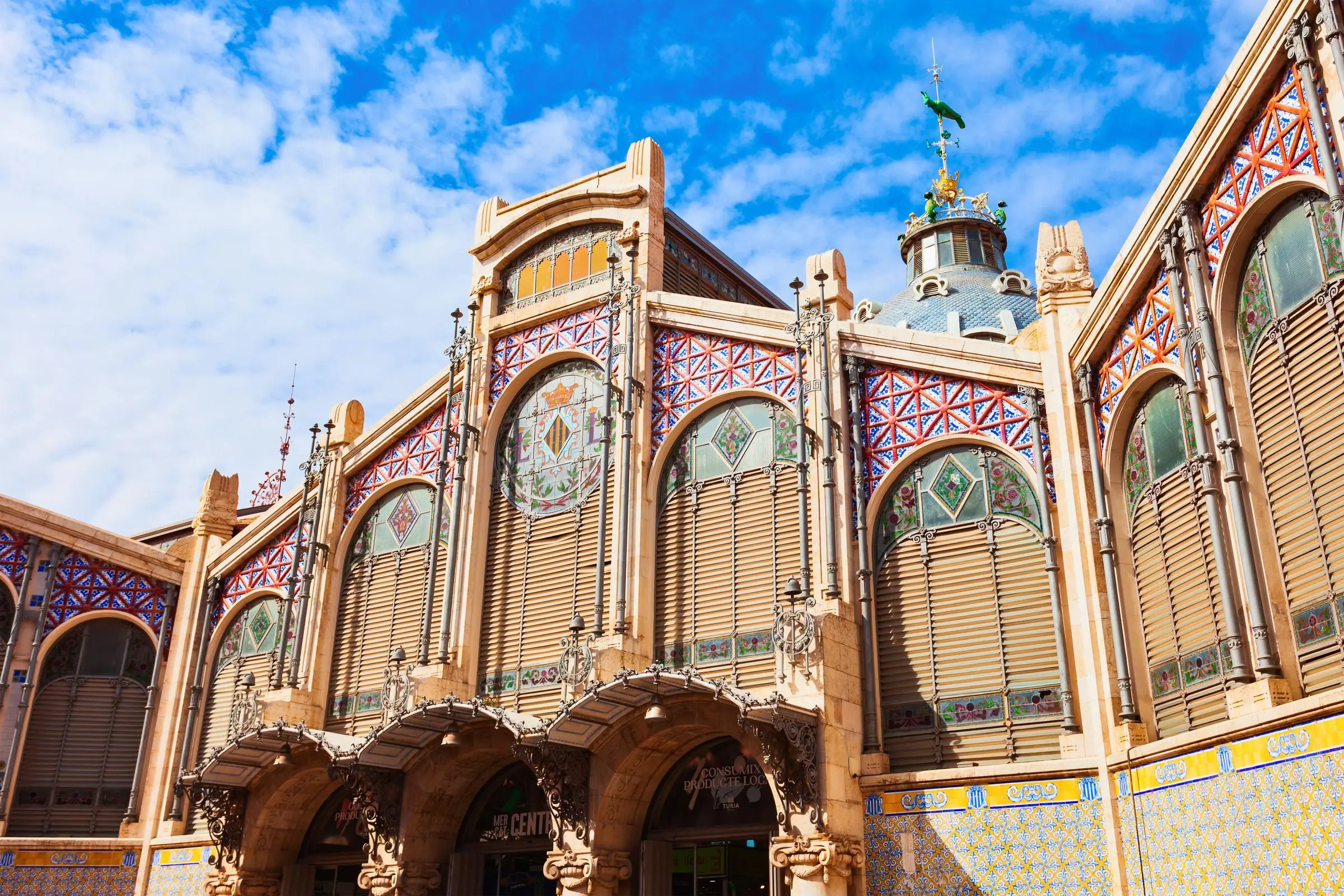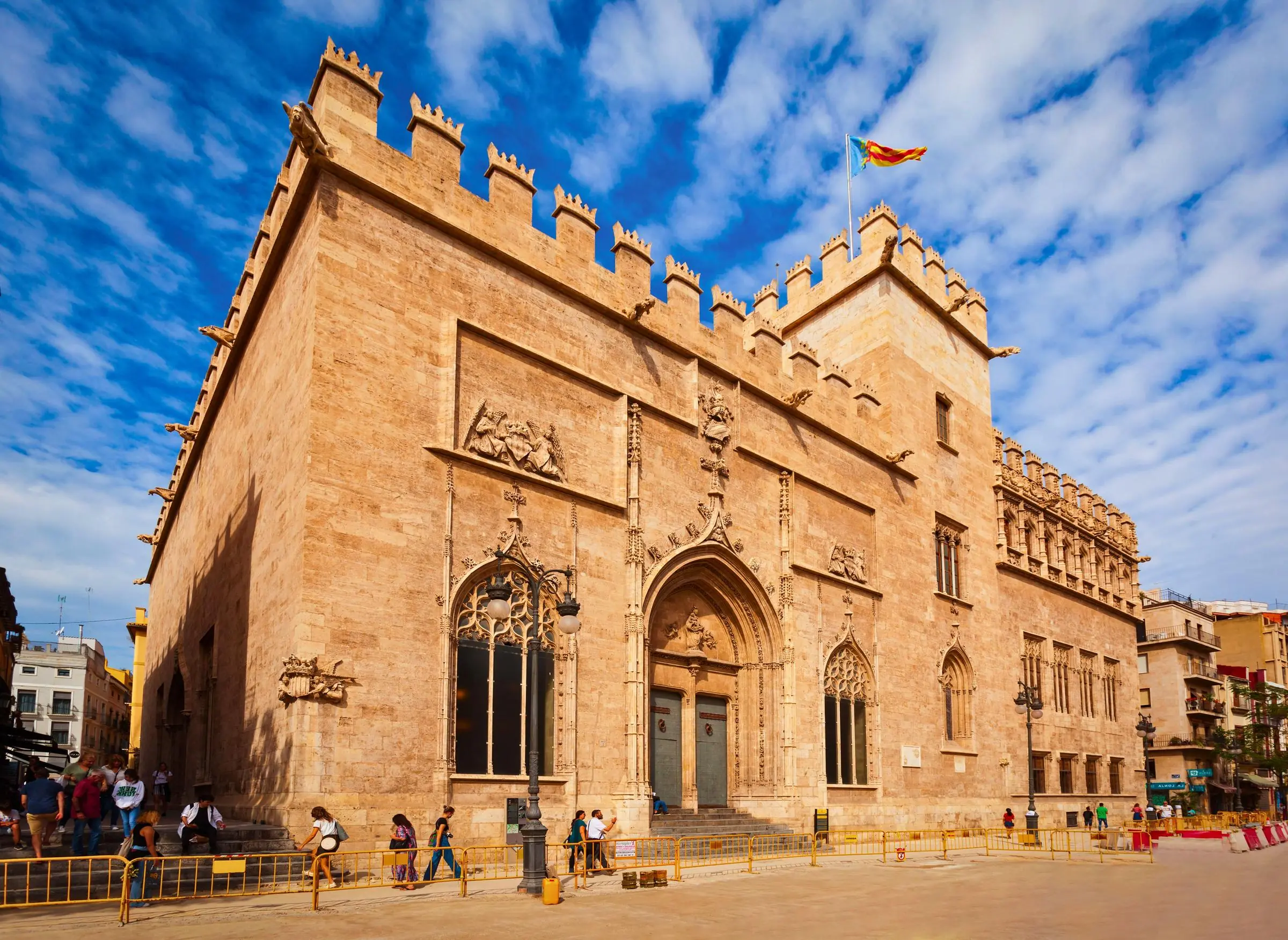
Directly across the street from the bustling Central Market, you’ll find a fortress-like building that looks like it belongs in a medieval fantasy novel. This is La Lonja de la Seda (The Silk Exchange), a masterpiece of late Gothic architecture and one of the few non-religious buildings in Spain to hold UNESCO World Heritage status.
Built between 1482 and 1533, La Lonja was the financial heart of Valencia during its 15th-century Golden Age. It was here that merchants from across the Mediterranean gathered to negotiate contracts, trade silk, and establish the banking rules of the era. Today, it stands as a monument to civic wealth and architectural engineering.
Whether you have 30 minutes to wander through the columned hall or three hours to trace the city’s entire Silk Route, here is how to make the most of your visit to La Lonja de la Seda.
How to Visit: Advice for Different Travelers
La Lonja is relatively small compared to sprawling palace complexes, meaning a standard visit only takes about 45 minutes. However, how you choose to experience it should depend on your schedule and interests.
- For the Time-Poor: If you just want to see the famous twisting columns and snap a few photos, you don’t need a guided tour. Buy a fast-track entry ticket or use the Valencia Tourist Card for free entry. You can walk through the three main rooms and the courtyard in under an hour.
- For History & Architecture Buffs: The building lacks extensive informational plaques. To understand the symbolism of the gargoyles, the mechanics of the spiral staircase, and the history of the maritime consulate, book a guided walking tour that includes La Lonja.
- For Budget Travelers: Entry is generally very cheap (around €2), but if you want to save every penny, visit on a Sunday or a public holiday when admission is completely free. Be warned: Sundays get crowded, so arrive right when doors open at 10:00 AM.
Don’t Confuse the Buildings! La Lonja de la Seda (The Silk Exchange) is the historic trading hall located on Plaza del Mercado. The Silk Museum (Museo de la Seda) is a separate institution located about a 10-minute walk away in the old College of High Silk Art. Both are worth visiting, but they require separate tickets.
Tickets & Tours Compared
Because standard entry is inexpensive, the real decision is whether you want to explore the building on your own or combine it with a broader walking tour of Valencia’s historic center.
Silk Exchange, San Nicolás & Cathedral Tour
- Includes skip-the-line entry to La Lonja
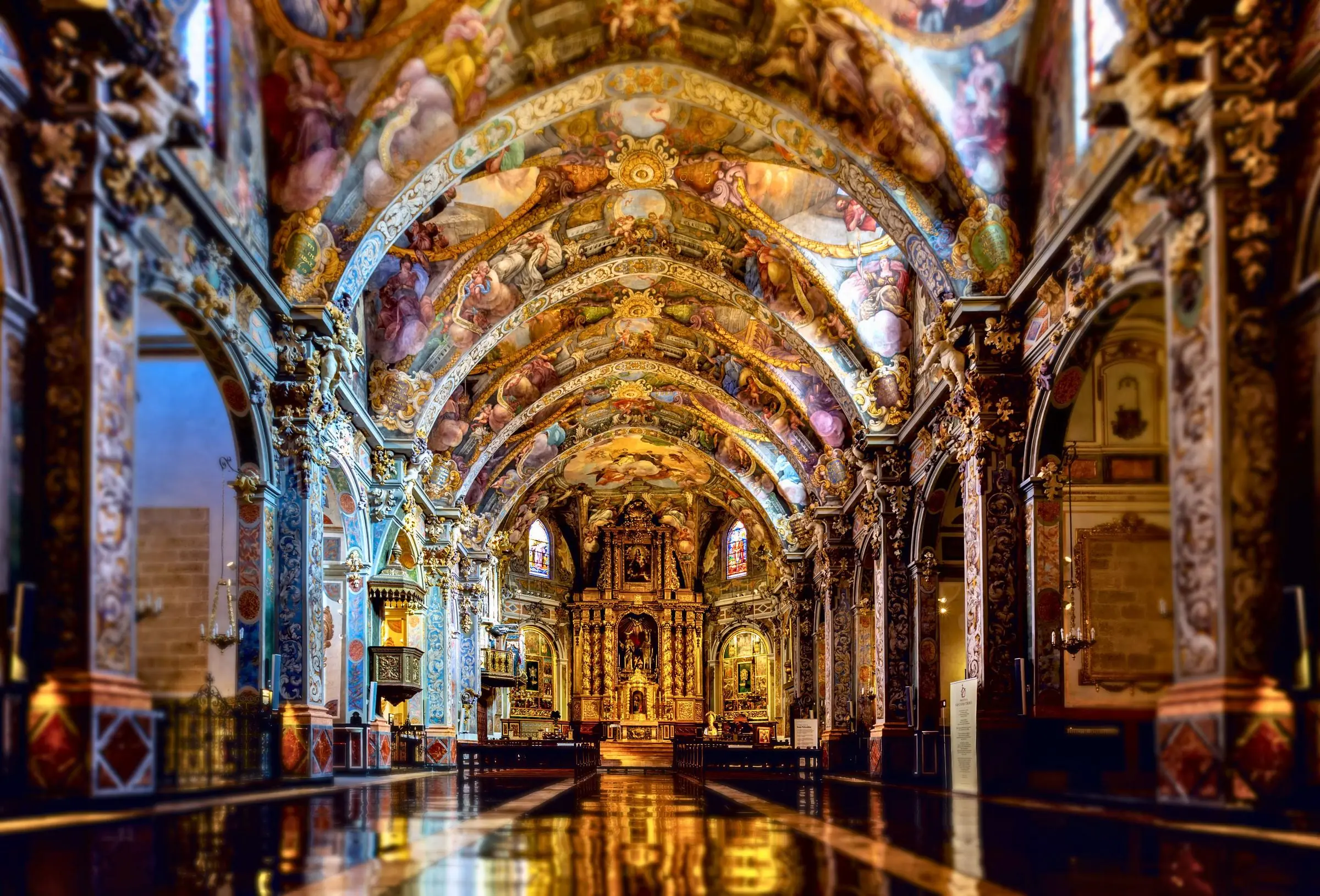
- Guided visit to the “Sistine Chapel of Valencia” (San Nicolás)
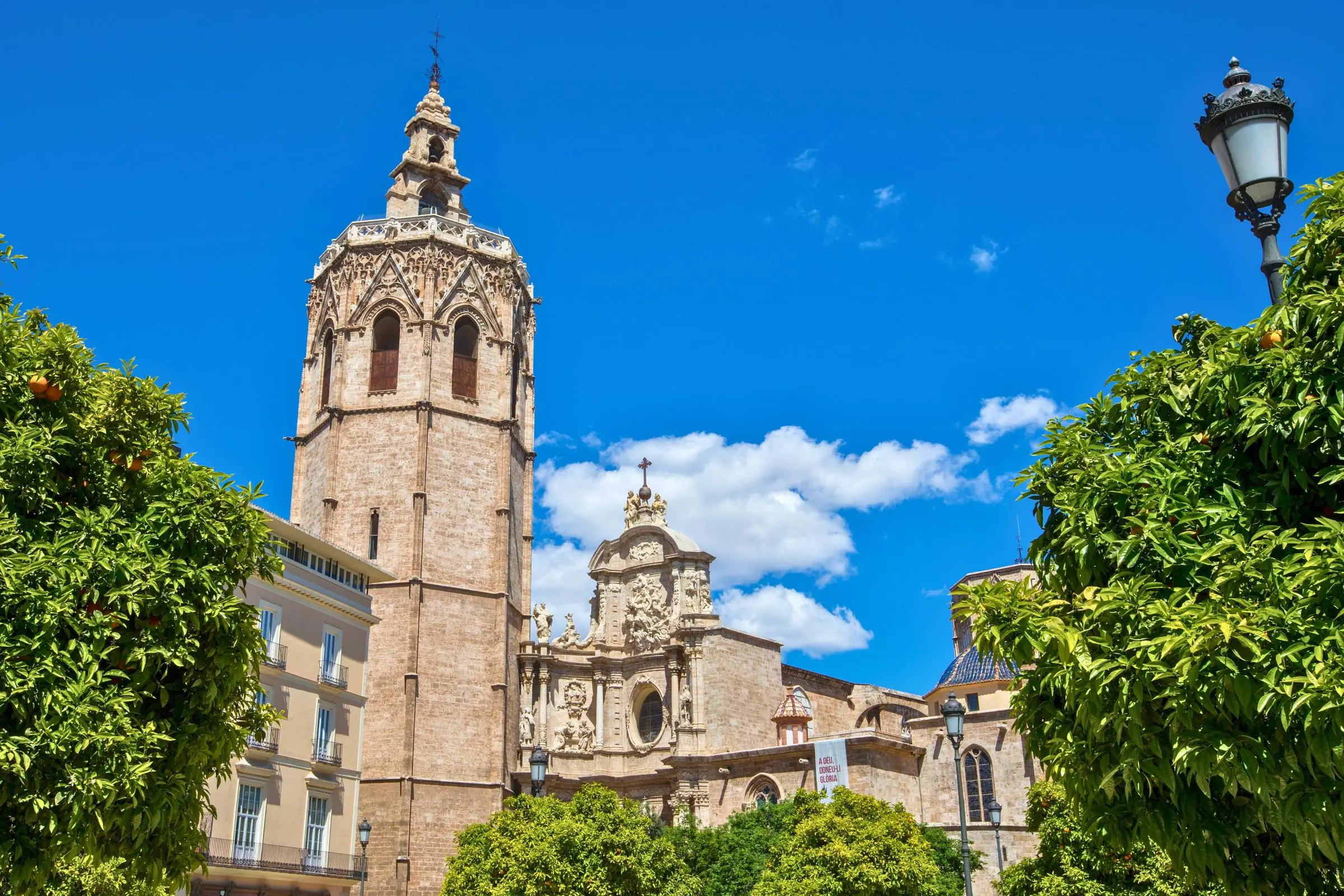
- Full guided tour of the Valencia Cathedral
- 2.5-hour comprehensive historical context
Valencia Silk Route Walking Tour
- Focuses heavily on Valencia’s 15th-century trade history
- Includes entry to La Lonja de la Seda
- Visits the neighborhood where silk weavers lived
- Ideal for specific history enthusiasts
Fast-Track Entry + Audio Guide
- Skip the ticket counter line
- Includes a downloadable audio guide app
- Explore at your own pace
- Best if you only have 30-45 minutes
If you have purchased the Valencia Tourist Card, standard entry to La Lonja de la Seda is 100% free. You do not need to book a time slot in advance; simply show your active card at the ticket desk.
5 Structural Highlights to Look For
La Lonja is divided into three main sections, connected by a central courtyard. The architect, Pere Compte, designed the building to reflect the wealth and power of the city. Here are the five specific details you shouldn’t miss.
1. The Twisting Columns of the Sala de Contratación
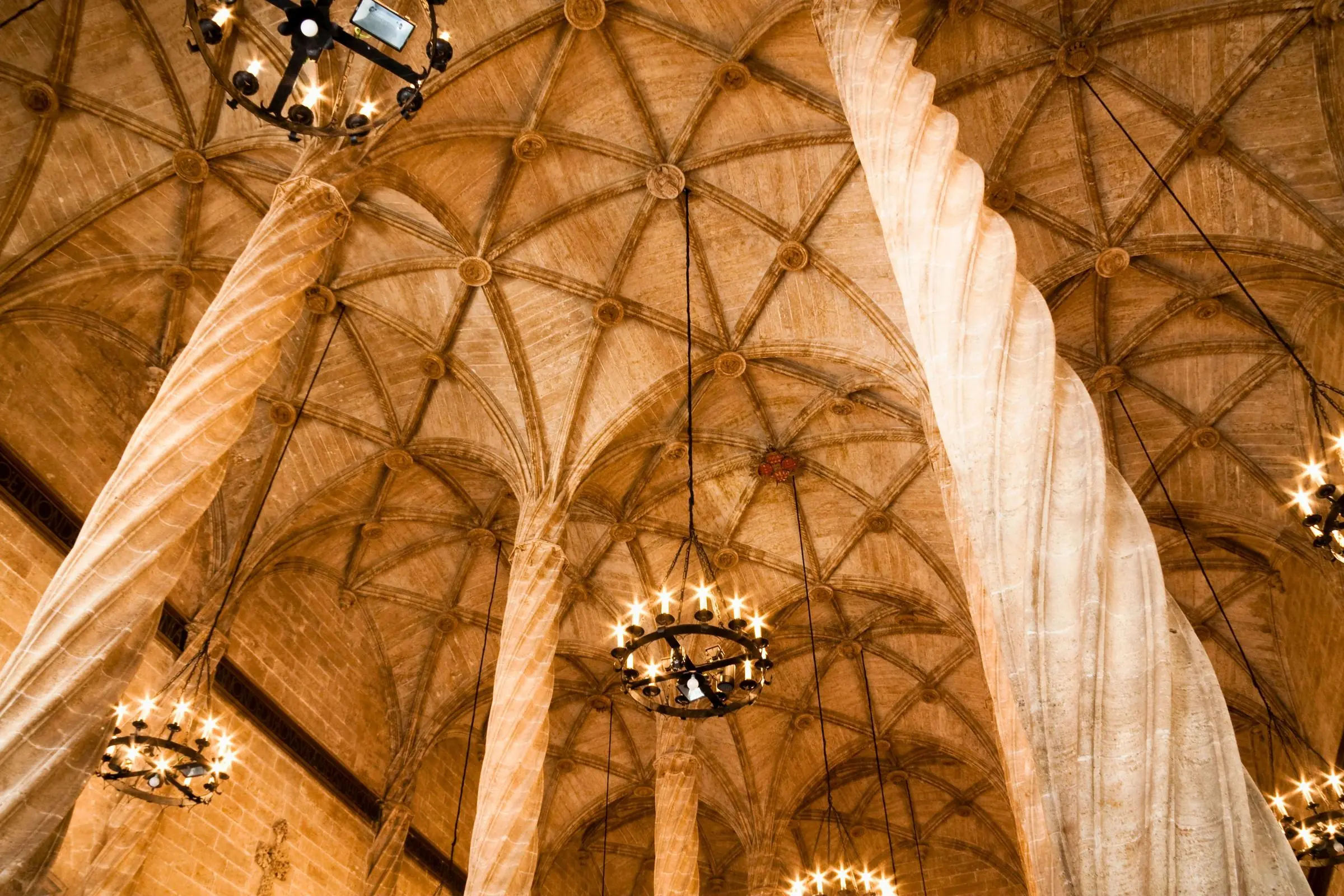
The Sala de Contratación (Contract Hall) is the main room you enter from the street. It is a massive, echoing space supported by 24 spiraling stone columns that rise nearly 16 meters (52 feet) into the air.
The columns are designed to look like palm trees, with their “fronds” fanning out to create the ribbed vaulting of the ceiling. Originally, the ceiling was painted blue with gold stars to represent the dome of heaven. This was a deliberate psychological design: it was meant to remind the merchants trading below that God was watching their transactions, encouraging honest business.
2. The Patio de los Naranjos
Step through the heavy wooden doors of the Contract Hall and you’ll find yourself in the Patio de los Naranjos (Courtyard of the Orange Trees). This walled garden provided a quiet place for merchants to take a break from the noisy trading floor.
The courtyard features a central star-shaped fountain and is planted with fragrant orange and lemon trees. Take a moment to look back at the facade of the building from the courtyard—the Gothic windows and intricate stone tracery are best viewed from this angle.
3. The Coffered Ceiling of the Consulado del Mar
Adjacent to the courtyard is the Consulado del Mar (Consulate of the Sea), which served as a maritime court where trading disputes were settled.
Walk up the grand stone staircase to the main chamber. The highlight here is not the floor, but the ceiling. The massive, intricately carved wooden coffered ceiling is a masterpiece of Renaissance woodwork. Interestingly, it wasn’t originally built for La Lonja; it was rescued from the old Town Hall (Casa de la Ciudad) before it was demolished in the 19th century and meticulously reassembled here.
4. The Open-Axis Spiral Staircase
If you look closely near the entrance to the Consulado del Mar, you’ll see a stone spiral staircase leading up to the tower. While visitors are generally not allowed to climb it for safety and preservation reasons, you can peek through the doorway.
This staircase is an architectural marvel of the 15th century. Unlike standard spiral staircases that wrap around a solid central pillar, this one has an open central axis. You can look straight up through the middle of the spiral all the way to the top. It demonstrates the incredible masonry skills of Pere Compte.
5. The Satirical Gargoyles
Before you leave, walk around the exterior of the building on Plaza del Mercado and look up. La Lonja is ringed by 28 gargoyles.
While gargoyles were traditionally used as water spouts, these serve a dual purpose as satirical and moralistic art. If you have a zoom lens or binoculars, you’ll notice that many of them are surprisingly bawdy or grotesque—depicting naked figures, monsters, and people in compromising positions. They were meant to represent the sins of the flesh and the vices that merchants should avoid.
Valencia’s Golden Trading Era
To appreciate La Lonja, you have to understand the era in which it was built. The 15th century is known as the Siglo de Oro Valenciano (Valencian Golden Age).
During this time, Valencia surpassed Barcelona as the most important port on the Iberian Peninsula. The city’s wealth was driven by agriculture, ceramics, and, most importantly, the silk trade. Mulberry trees (which feed silkworms) were planted extensively across the region, and thousands of looms operated in the city’s Velluters neighborhood.
La Lonja was built specifically to handle this booming economy. The city outgrew its older, smaller exchange, and the local government commissioned a building that would intimidate visiting merchants with its sheer scale and beauty. It was a statement piece: a declaration that Valencia was a global economic powerhouse.
Keep Planning: To see where the religious power of the city was concentrated during this same era, read our guide to the nearby Valencia Cathedral.
Logistics & Practical Tips
How to Get There
La Lonja is located at Carrer de la Llotja, 2, right in the heart of the Ciutat Vella.
- By Foot: It is a 1-minute walk from the Central Market and a 5-minute walk from the Cathedral.
- By Metro: The closest stations are Àngel Guimerà (Lines 1, 2, 3, 5, 9) and Xàtiva (Lines 3, 5, 9). Both are about a 10-minute walk away.
- By Bus: EMT bus lines 7, 27, and 73 drop you very close to the Plaza del Mercado.
Opening Hours
- Monday to Saturday: 10:00 AM – 7:00 PM
- Sundays and Public Holidays: 10:00 AM – 2:00 PM
- Note: Last entry is usually 30 minutes before closing.
Photography Tips
The Sala de Contratación is notoriously difficult to photograph due to the high dynamic range—the room is quite dark, but bright Mediterranean sunlight streams through the high Gothic windows.
- Timing: Visit right at 10:00 AM. The morning light hits the stone columns beautifully, and you’ll avoid the midday crowds blocking your wide shots.
- Gear: Bring the widest lens you have (or use the ultra-wide setting on your phone) to capture the full sweep of the vaulted ceiling.
- Courtyard: The Patio de los Naranjos offers excellent symmetry. Stand directly in front of the star-shaped fountain and shoot back toward the main hall’s facade.
Accessibility Note: The ground floor (Sala de Contratación and the courtyard) is wheelchair accessible. However, the upper floor of the Consulado del Mar is only accessible via a steep stone staircase, and there is no elevator in this 15th-century building.
Where to Stay Nearby
Staying near La Lonja puts you in the absolute center of Valencia’s historic district, making it easy to walk to almost all major attractions. The area around Plaza del Mercado is lively during the day but quiets down nicely at night.
Use the map below to find hotels and apartments within walking distance of La Lonja de la Seda:
Frequently Asked Questions
How much time do I need to visit La Lonja de la Seda?
Most visitors spend between 30 and 45 minutes inside. If you are using an audio guide or taking a guided tour, expect to spend about 1 hour exploring the architecture and history in detail.
Is La Lonja de la Seda free to enter?
Standard entry usually costs around €2. However, entry is completely free on Sundays and public holidays. It is also free any day of the week if you hold a valid Valencia Tourist Card.
Do I need to book tickets in advance?
For standard entry, you do not need to book in advance; you can usually buy a ticket at the door with a minimal wait. However, if you want to join a guided walking tour that includes La Lonja, you should book that a few days in advance, especially during the summer.
What is the difference between La Lonja de la Seda and the Silk Museum?
La Lonja de la Seda is the 15th-century trading exchange where merchants negotiated contracts and sold goods. The Silk Museum (Museo de la Seda) is a separate building nearby that focuses on the actual production of silk, featuring historic looms, fabrics, and the history of the weavers’ guild.
Can you go up the tower at La Lonja?
No, the tower and its famous open-axis spiral staircase are generally closed to the public for safety and preservation reasons. You can only view the bottom of the staircase from the ground floor.
Is there a dress code to enter?
No, because La Lonja is a civic building and not a religious site, there is no strict dress code. You do not need to cover your shoulders or knees as you would for the Cathedral.