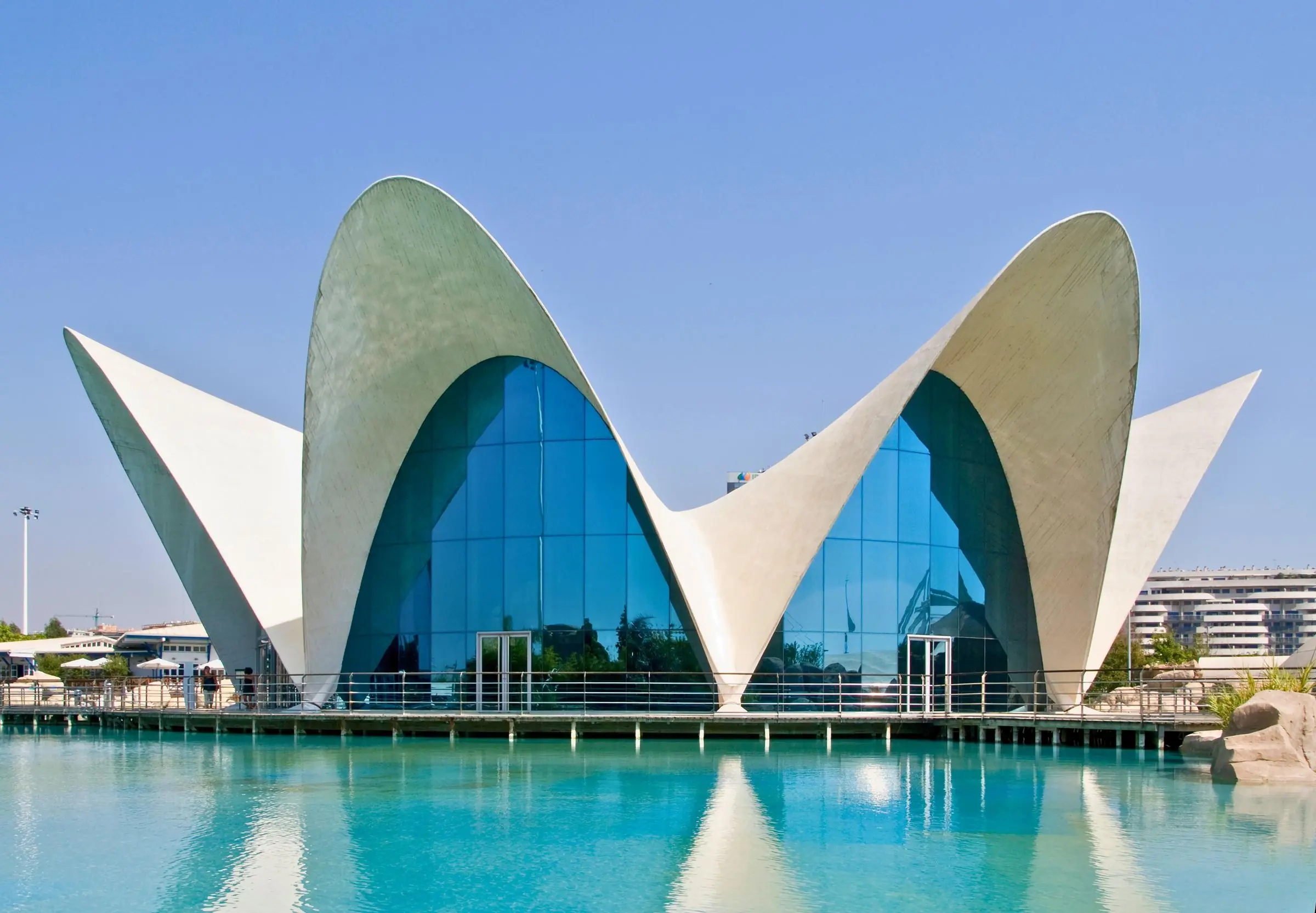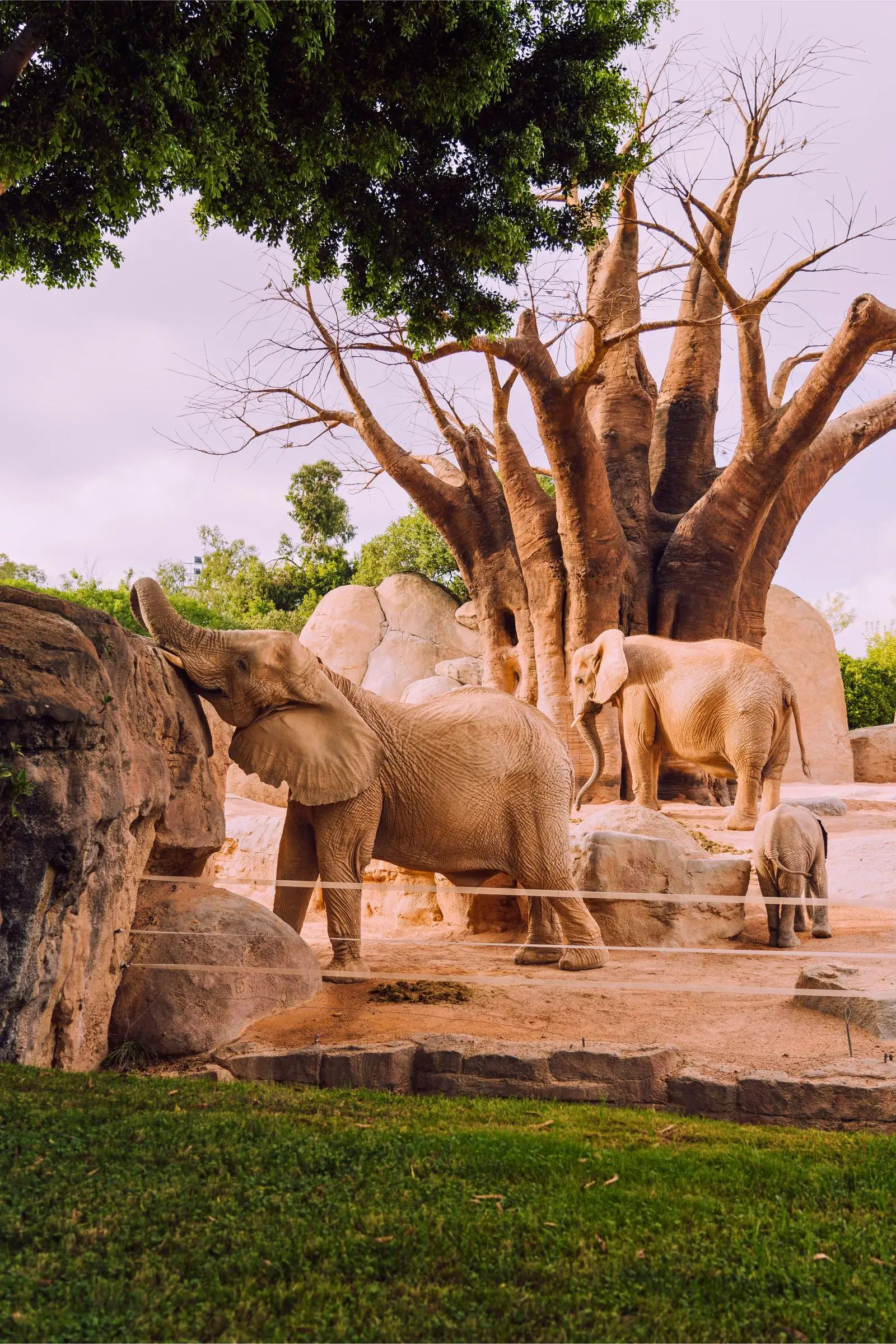
Bioparc Valencia is not a traditional zoo. Built on the concept of “zooimmersion,” the park uses hidden barriers like moats, rivers, and glass walls to separate visitors from the animals. The result is a landscape where different species appear to co-exist in shared habitats, much like they do in the wild.
Located at the western end of the Turia Gardens, the park focuses exclusively on African flora and fauna. Because the pathways wind through dense vegetation and over artificial rock formations, navigating the park requires a bit of planning—especially if you are managing a stroller or trying to avoid the midday heat.
This guide breaks down exactly how to tackle the park’s five distinct zones, which entry tickets make the most sense for your schedule, and how to get there using Valencia’s public transit network.
Who is Bioparc For?
Bioparc is heavily geared toward conservation education and observation. It is a member of the European Association of Zoos and Aquaria (EAZA) and participates in dozens of captive breeding programs.
- Families with Young Children: The park is entirely step-free. Ramps and elevators connect all levels, making it highly accessible for strollers. There is a large playground near the main restaurant, and nursing rooms are available near the entrance and the central food court. If you are traveling with toddlers, read our broader Valencia with kids guide.
- Time-Poor Travelers: You do not need a full day here. Because the park is compact (about 25 acres), you can comfortably walk the main circuit in three hours. If you are deciding between this and the city’s aquarium, check our Oceanogràfic vs Bioparc comparison.
- Budget Travelers: Food inside the park carries a captive-audience markup. While you cannot bring large coolers or full picnic spreads inside, you are allowed to bring water bottles and small snacks. To save money, eat a heavy breakfast, rely on your snacks, and grab lunch in the surrounding Campanar neighborhood after your visit.
Tickets and Entry Logistics
Bioparc operates on a timed-entry system during peak seasons (spring through autumn). Walk-up tickets are available at the box office, but the lines stretch into the plaza by 10:30 AM. Buying your tickets in advance allows you to bypass the ticket counter and walk straight to the turnstiles.
Bioparc Fast Track Ticket
- Skip the ticket office queues
- Smartphone barcode accepted
- Access to all 5 African zones
- Free cancellation up to 24h before
The Valencia Pass
- Includes Bioparc Fast Track entry
- Includes Oceanogràfic skip-the-line
- Includes 24h Hop-on Hop-off Bus
- Digital city audio guide app included
Animals are most active during the first two hours of the day (10:00 AM to 12:00 PM) and during feeding times. If you visit in the afternoon during the summer, many animals will be asleep in the shade.
Getting to Bioparc Valencia
Bioparc is located at Avenida Pío Baroja, 3, on the western edge of the city. It is well-connected by public transport.
By Metro: The closest metro station is Nou d’Octubre (Lines 3, 5, and 9). When you exit the station, walk straight down Avenida Pío Baroja for about 10 minutes (800 meters). The route is flat, paved, and clearly signposted. Check the Metrovalencia official site for current schedules.
By Bus: EMT Bus lines 98 and 99 stop directly outside the park entrance. Line 98 is particularly useful if you are coming from the northern parts of the city.
By Car / Parking: Bioparc has a dedicated underground parking garage. The maximum daily rate is €7, but you must validate your parking ticket at the Bioparc ticket office or gift shop before you leave to get this rate. Otherwise, you will be charged the standard hourly rate, which is significantly higher.
Deep-Dive: The 5 African Zones
The park is laid out in a continuous loop. You enter by crossing a long footbridge over the Turia parkbed, which acts as a psychological transition from the city into the “wild.”
1. Madagascar (The Lemur Forest)
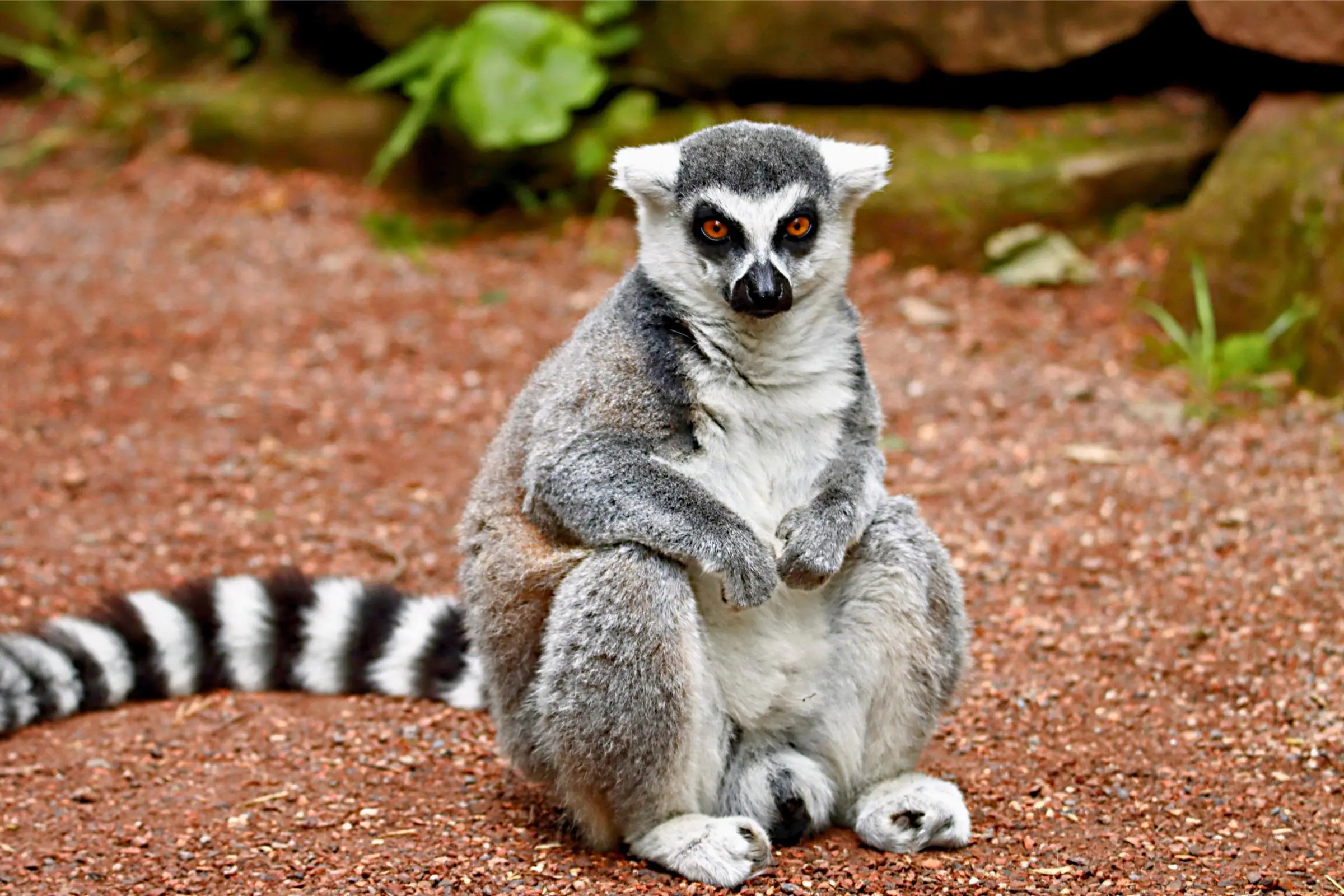
Immediately after the entrance plaza, you will find the Madagascar zone. This is a walk-through enclosure. There are no barriers between you and the animals.
Different species of lemurs (including the ring-tailed lemur) roam freely through the trees and across the footpaths. Park staff are stationed throughout this area to enforce strict rules: you must stay on the path, and you absolutely cannot touch or feed the animals. Because the lemurs are highly active, this is usually a highlight for young children.
2. Equatorial Forest
Moving deeper into the park, the landscape shifts to dense, humid vegetation. This zone focuses on primates and forest-dwelling mammals.
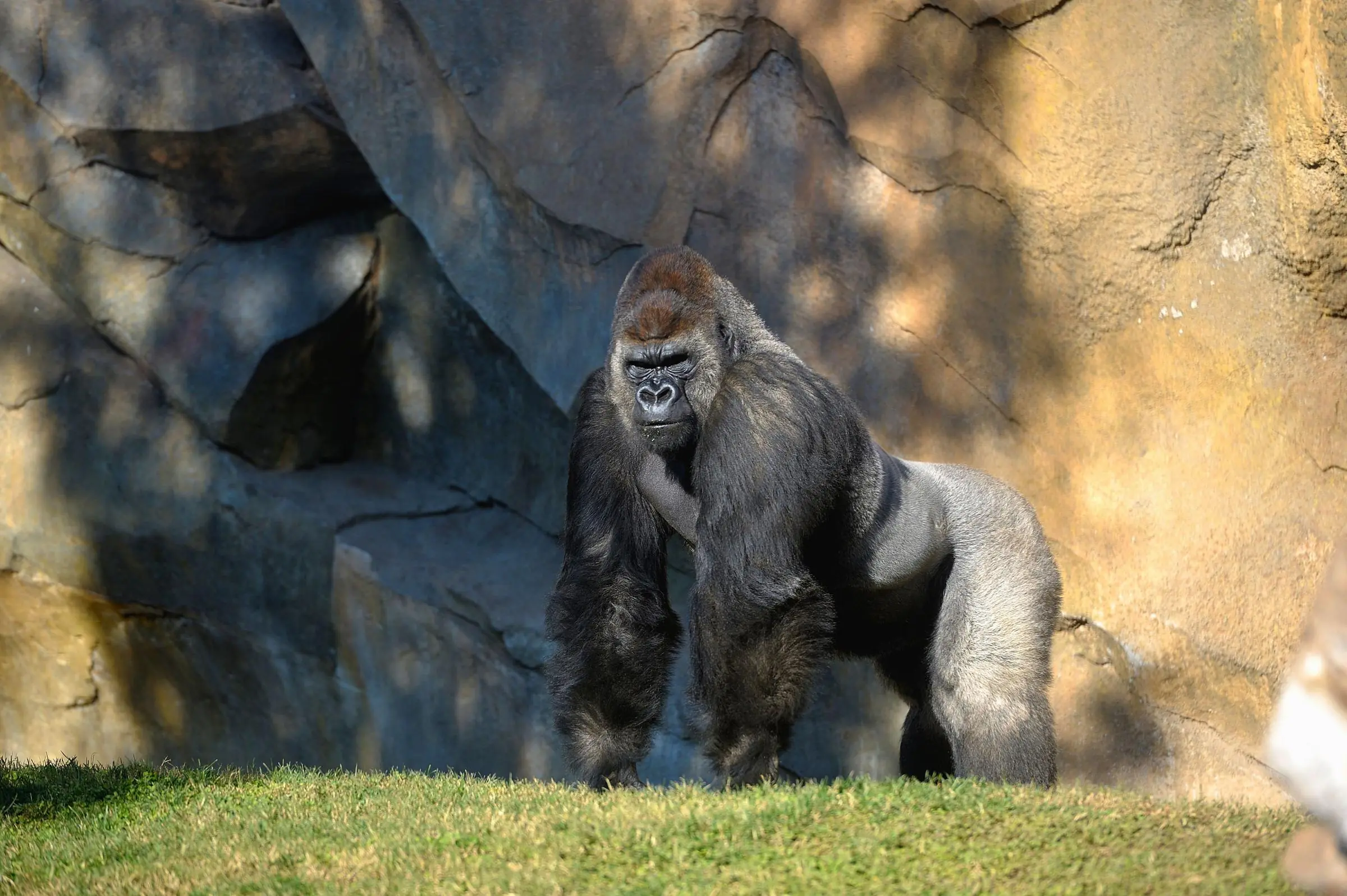
The centerpiece is the Gorilla enclosure. The zooimmersion design is highly effective here; you view the gorillas across a wide, water-filled moat or through massive floor-to-ceiling glass panels. The enclosure is shared with other primate species, mimicking the multi-species environments of central Africa. Nearby, you will also find chimpanzees, leopards (viewed through glass), and the bongo antelope.
3. Kitum Cave
This is an artificial recreation of the real Kitum Cave in Kenya, where elephants go to mine salt. At Bioparc, the cave serves as a shaded, subterranean viewing gallery.
The main draw here is the underwater viewing windows. You can watch hippopotamuses and Nile crocodiles swimming beneath the surface. The water is kept remarkably clear, and watching a two-ton hippo glide weightlessly underwater is a stark contrast to seeing them sleep on land.
The Kitum Cave is heavily air-conditioned. If you are visiting in July or August, time your route so you hit the cave around 1:00 PM when the midday heat peaks.
4. The Baobab Savanna
This is the largest and most open area of the park. It is designed to look like the sweeping plains of East Africa, punctuated by massive (artificial) Baobab trees.
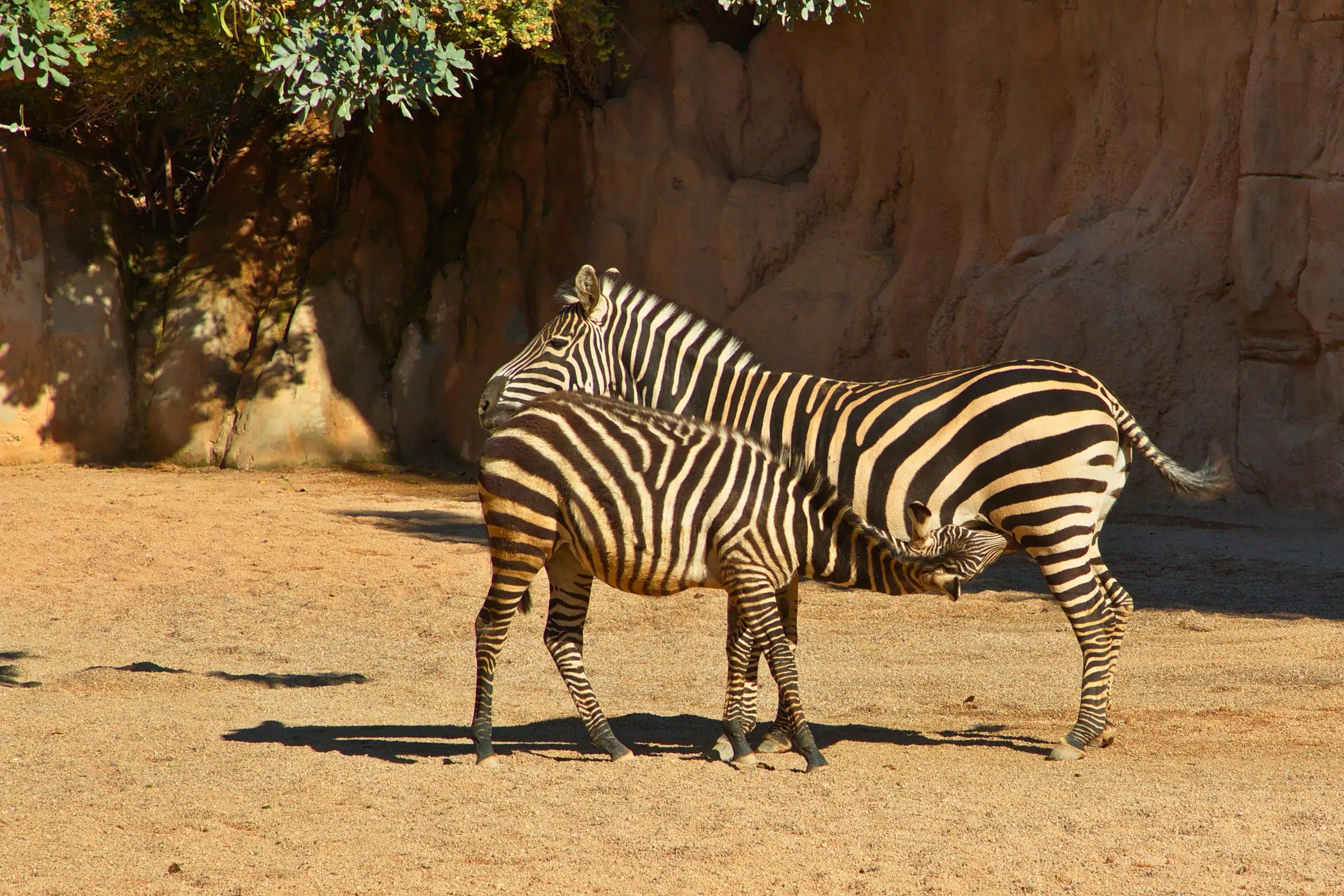
The savanna is divided into a wet zone and a dry zone. You will see herds of giraffes, rhinos, zebras, and ostriches sharing the same sightlines. The elephant enclosure is vast, featuring a waterfall and a bathing pool. Because the barriers are hidden in trenches, it looks as though the elephants could walk right up to the giraffes.
5. Kopje Rocks
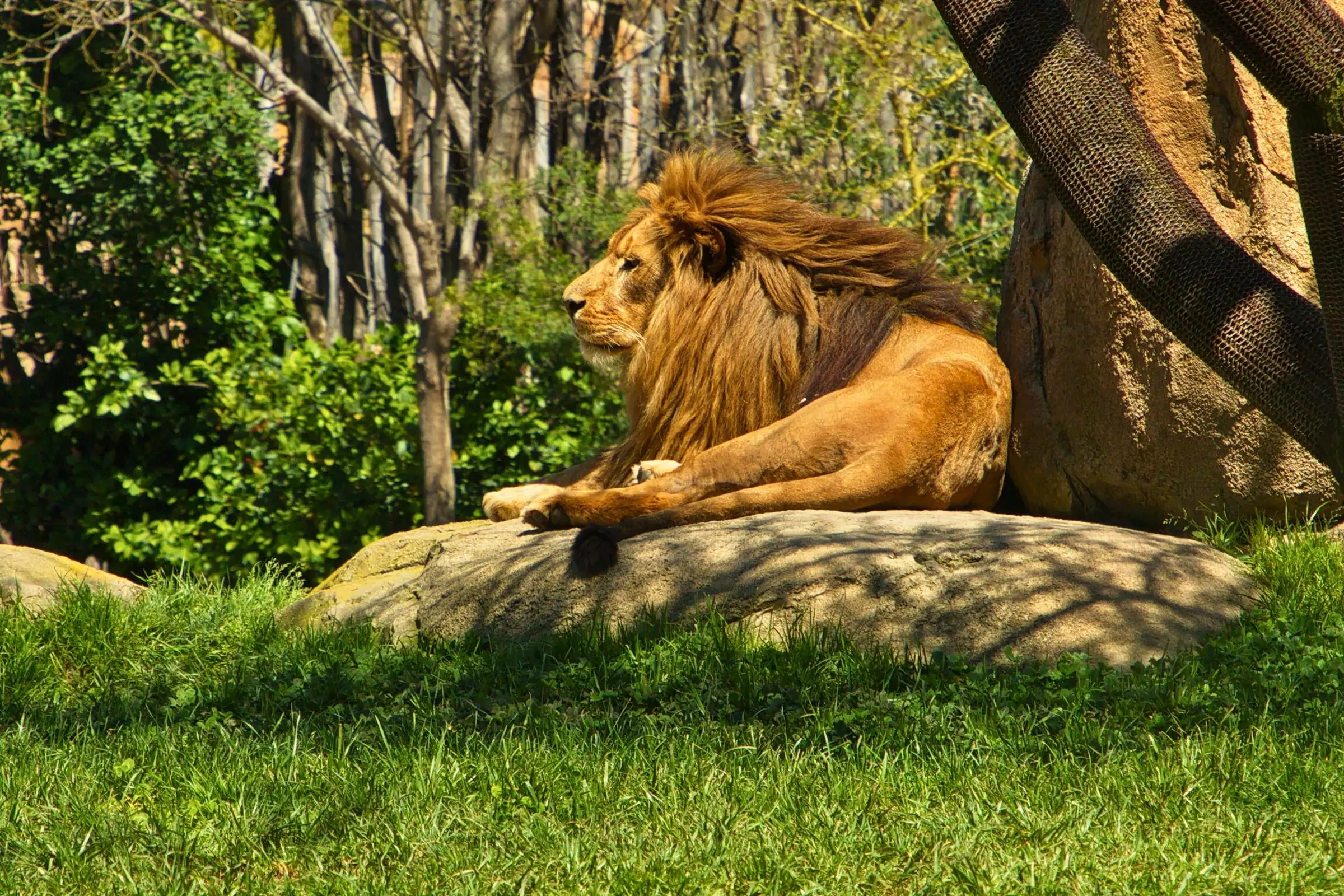
The Kopje (Dutch for “little head”) refers to the granite boulder formations that dot the African savanna. At Bioparc, these artificial rocks serve as the lion enclosure.
Lions naturally seek high vantage points to survey their territory and catch the breeze. The rocks are fitted with heated pads in the winter and cooling elements in the summer to encourage the lions to rest near the viewing windows. You can often get within inches of a sleeping lion, separated only by a pane of reinforced glass.
Food, Drink, and Facilities
Bioparc has several kiosks for drinks and ice cream, but the main dining hub is the Ndja Restaurant.
Ndja is a cafeteria-style restaurant located in the center of the park. The food is standard theme-park fare (pasta, roasted chicken, salads, fries). The main reason to eat here is the outdoor terrace, which overlooks the savanna enclosure. You can eat your lunch while watching the giraffes and rhinos.
Dining Tips:
- The restaurant gets slammed between 13:30 and 15:00. Eat at 12:30 to secure a table by the railing.
- If you want a sit-down meal with table service, there is a smaller cafe near the entrance plaza (outside the ticketed area).
- Water fountains are scattered throughout the park. Bring a refillable bottle.
Keep Planning: If you prefer to eat outside the park, check our guide to the Campanar neighborhood for local tapas bars and cafes within a 10-minute walk.
Where to Stay Near Bioparc
If Bioparc is the main focus of your trip, staying in the Campanar district keeps you close to the park and the Turia Gardens. However, because the metro connection is so efficient, staying in the Ciutat Vella (Old Town) is usually a better choice for overall sightseeing.
Use the map below to find accommodations along Metro Lines 3 or 5, which provide direct access to the Nou d’Octubre station.
FAQ
How long does it take to walk through Bioparc Valencia?
Most visitors spend between 2.5 and 3.5 hours at the park. The pathways are laid out in a continuous loop, so you won’t waste time backtracking. If you stop for lunch at the Ndja restaurant, plan for about 4 hours total.
Can I bring my own food into the park?
Officially, large picnics and coolers are not allowed inside the park. However, staff generally do not object to small snacks (like granola bars or fruit for children) and refillable water bottles. Bags are checked at the entrance.
Is Bioparc Valencia wheelchair and stroller accessible?
Yes, the park is 100% accessible. There are no stairs on the main pathways. All elevation changes are handled by gentle ramps or large elevators, making it very easy to navigate with a stroller or wheelchair.
What happens if it rains?
Bioparc is primarily an outdoor attraction. While the Kitum Cave and the restaurant offer indoor shelter, the majority of the pathways are exposed. If heavy rain is forecast, it is best to reschedule or bring an umbrella, as the animals will likely seek shelter and be harder to spot.
Are there lockers available at Bioparc?
Yes, there are coin-operated lockers located near the main entrance, just past the ticket turnstiles. They are useful for storing heavy backpacks or motorcycle helmets during your visit.
Do I need to print my Bioparc tickets?
No. If you purchase a digital entry pass, you can scan the barcode directly from your smartphone at the turnstiles. Ensure your screen brightness is turned up for the scanner to read it easily.